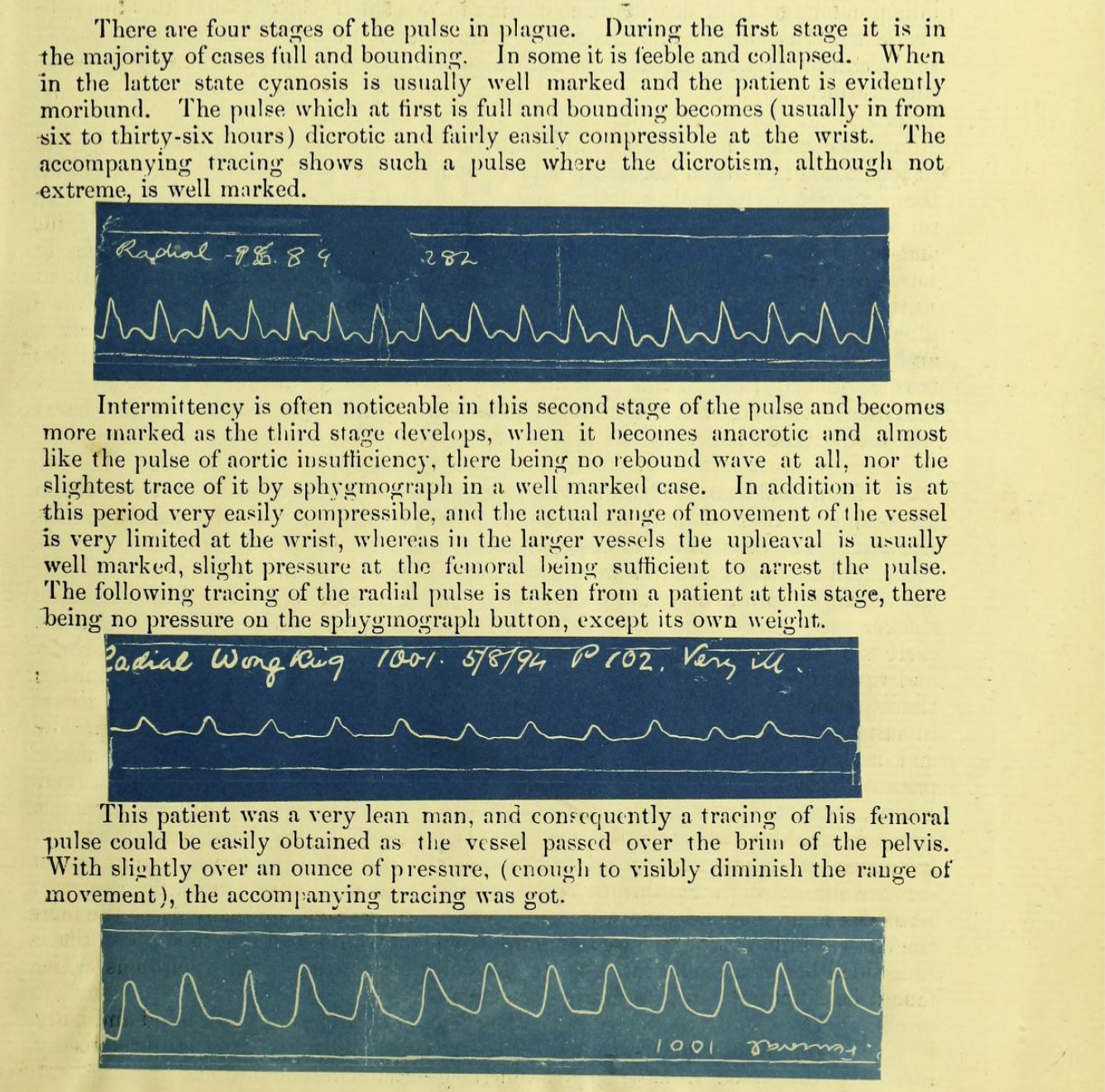
In the "Patient Vitals of the Bubonic Plague in China project," I investigate how standardized forms of medical visualization, such as sphygmographs and fever charts, worked together with photography and pandemic mapping to communicate colonial knowledge about the plague outbreaks in China in the late 19th and early 20th centuries. By tracking these media formats, I look at how the intimate realities of the suffering patient were represented through the abstract aggregates of epidemiological data in the European and American understanding of the plague as a Chinese disease.The illustration on this page comes from James A. Lawson’s medical report, The Epidemic of Bubonic Plague in 1894. Writing as the medical officer in charge of the Epidemic Hospital in British Hong Kong, Lawson strongly objected to the condition of the colonial government-sponsored Tung Wa Hospital, which had, in his view, sacrificed standards in deference to Chinese skepticism about Western medicine. In producing the report, Lawson worked with local printers to fashion the fever charts and sphygmographs included in patient case files.